Looking to update your home decor? Been waiting on a great deal before buying new furniture? Check out our picks for this weeks hottest deals featuring great savings on bar stools, shelving units, bedroom decor, and curtains. This Weeks Best Furniture...
Sunday, July 19, 2015
Keeping Cats Out Of Your Garden
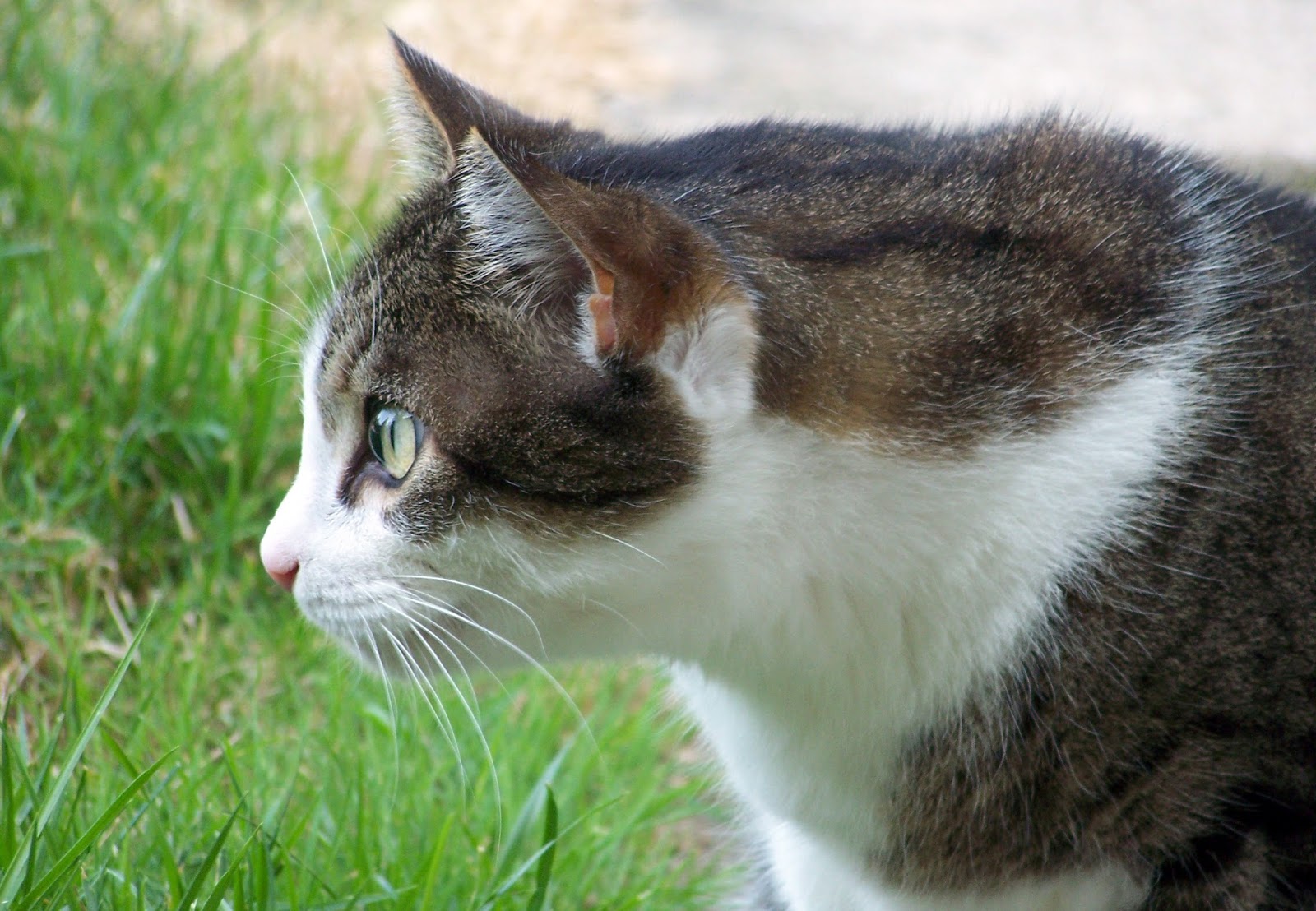
I love my cats and my garden so I am determined never the two shall meet. Now I plant for the cats too like cat mint, catnip and I put wire baskets over the plants so that the cats can't kill the plants. But I do not want them in my vegetable garden. Their urine is strong and kills the plants. And they break the plants as they lie on them. So here are some ideas of keeping them out of your flower and vegetable garden.
Your first line of defense when keeping cats out of your garden is to make sure that you have your boundaries secure. If there are any gaps in your fence, you should make sure that you block them to prevent any low access. Cats are very agile animals, and can jump very high. Normally they can jump a fence, which is why you should also invest in string or taut wire across the top.
If a cat has made his way into your garden, it may be hard to get him out. Most people choose to use dogs, simply because dogs are known to dislike cats. There are several dog breeds out there that completely dislike cats, such as pit bulls and Dobermans. Cats are completely fearful of these breeds, and will flee if they see them around.
All cats are known to despise water as well. If you spot a cat in your garden, water almost always gets him out. All it takes is a bucket of water or a well aimed squirt with a garden hose to make him run away. After you have hit the cat with water several times, he should get the hint not to come back anymore. If he comes back, simply squirt him or throw more water on him until he gets the idea.
Keep the feline out of the greenery enclosure with these green arrangements.
So the area kitty continues diving in your greenery enclosure. Should you stress?
Likely — a bit. Felines are carnivores and their dung can contain parasites or pathogens not exhibit in herbivore excrement.
Fortunately, there are a few eco amicable arrangements that will help to keep felines out of your tremendously cherished vegetable quaint little inns from your developing sustenance.
Felines like to stroll on delicate soil and will evade thorny surfaces. Make your patio nursery beds into a less welcoming litter box with the accompanying thorny arrangements:
Blanket the patio nursery in twigs, set a few inches separated all through the bed,
Push pine cones or other thorny yard trimmings down into the dirt around your plants,
Lay chicken wire over the beds. On the other hand, upcycle the cross section produce sacks from onions or potatoes by spreading them on the greenhouse and mooring them with twigs. Build the opening size around your growing plants if vital.
Utilization fragrance to keep the felines away
Interplant in the greenery enclosure. Felines detest the odor of mourn, lavender & pennyroyal, Coleus canina and lemon thyme — so plant a couple of these all through the greenery enclosure space. As a reward, interplanting will pull in pollinators and can help to maintain a strategic distance from vermin as well.
Felines stay away from solid citrus fragrances. To avert unwelcome hide balls, toss peels specifically on the greenery enclosure.
The aroma of human hair discourages felines. Void your brushes onto the patio nursery and recover your domain! (Stay far from moth balls however — this is a usually refered to recommendation — they are dangerous to felines & people).
Wash well to prevent greenery enclosure felines
On the off chance that your guest has a most loved area, take a stab at washing the range well with a hose (or water from your downpour barrel!) to uproot the fragrance or pee shower. Felines have a tendency to pick the same spot over and over — uprooting their past stake on your greenery enclosure will go far towards forestalling reoccurrences.
Make feline away splash
Stir up a bunch of feline away splash. Join 1 tsp of dark pepper, dry mustard & cinnamon in a splash bottle with a couple drops of citrus fundamental oil and a smashed garlic clove. Fill to the top with water. Apply to your patio nursery beds. Gossip has it that this enchantment mix of solid aromas is unparalleled kitty repellent.
Make an open air litter box
Felines adoration mint, honeysuckle & catnip. Why not plant a little, separate, feline inviting garden that incorporates an assortment of these plants? Place a little sand box close by.You'll still need to tidy up and legitimately discard your felines waste, however it my help keep kitty—and her business — out of
Protecting your plants is a different story. Mothballs are said to be very effective, as cats don’t like the smell. You can use mothballs around your plants, garden borders, or even along the fence. There are other repellents that you can use as well, such as cayenne peppers, tobacco, lavender oil, citronella oil, mustard oil, and even lemon grass oil.
If you visit your local hardware or lawn store, you can find motion activated sprinklers. They work great in keeping cats out of your garden. Once you install the sprinkler system and a cat comes into the area, the detector will pick up the cat’s presence and immediately shoot out a jet of water that will douse the cat. In most cases, all it takes is a few times of exposure to the sprinkler before a cat learns to stay out of that area.
Sound devices that feature high frequencies are also a great way to scare off cats, although they aren’t annoying to humans. You can find several different models, such as those that stay on all the time, and those that are motion detected. To use this type of device, you’ll need to make sure that the model you have is strong enough to cover the entire area. If you model you are using is strong enough to cover your entire garden, it should suffice in scaring off any unwanted animals.
You can also use commercial repellents as well. Commercial repellents use scents to keep cats away, and shouldn’t be used near any food crops. Due to their high chemical content, commercial repellents can pollute your crops. You can find them at your local department store, with several varieties to choose from, many of which will fend off other animals from your garden as well.
If you have a garden, it can be very annoying if cats and other animals decide to make your garden their home. If you stick to your guns and do your part, you can prevent them from bothering your garden or your crops. Once you have secured your boundaries around the garden, you should try using water first. If water doesn’t seem to work, you can look into another method, such as commercial repellents.
Try visiting your local zoo and buying some lion poop it worked for me when my own cats kept going in my sunflower garden and snapping the stems. They liked to lie there until I sprinkled it liberally with lion poop. I have also got rid of moles and gophers with fox urine that I bought at the zoo.
Monday, July 13, 2015
Benefits of Fiber in Your Dog's Diet
We know the benefits of fiber in our own diet, but is their any benefits of fiber in a dog's diet? Fiber was consider filler and bulk in year's past, but today, the nutritional value of fiber in the dog's diet is finally realized.
What exactly is fiber? It is a part of carbohydrates. Fiber is not highly digestible by the body. Your dog's diet can benefit from fiber in appropriate amounts. Just like humans, too much fiber in a diet can have negative effects on the digestive system. It is always important to monitor your dog's diet to maintain a healthy level of fiber to suit your pet's needs. Talk to your veterinarian about the benefits of fiber in your dog's diet.
Obedience is prevalent in both humans and pets. Too often, pet's become overweight. Fiber in your dog's diet is a terrific way to help your pet lose excess weight. Maintaining a healthy weight is crucial to the longevity and quality of your dog's life. We know that fiber cannot accomplish weight loss on its own, but it can truly make a difference. Fiber helps to keep your dog feeling full and content without large amounts of calories.
The pets who achieve the desired weight goal may need a little extra fiber in the dog's diet to maintain the desired weight. Combining fiber with strict portion control, you will be able to create a dog diet that is healthy and satisfying for your pet.
Again, similar to humans, constipation does occur in pets. Your dog's diet should contain fiber to help prevent this medical condition from occurring. As your dog ages, his or her diet should contain elevated levels of fiber. Senior dogs tend to deal with issues of constipation more frequently than their younger counterparts. For this reason, you will note higher fiber content in senior dog diets.
How does fiber help keep things moving? Fiber absorbs water. With the absorption of water in the fiber, the contents in the intestine have more bulk. This is what causes the movement along the intestinal tract. The passage time through the bowel becomes more normalized and regular.
Healthy amounts of fiber in your dog's diet will contribute to fecal consistency. You will know when your pet is getting the proper amount of fiber when your dog relieves himself regularly. Too much fiber in your dog's diet will result in loose and messy stools.
Some studies indicate that a slight increase in fiber can assist in the management of diabetes mellitus. The fiber helps to control blood sugar levels by slowing the absorption of sugar from the intestine.
Take note that excessive amounts of fiber can have negative affects on your dog's health. For this reason, it is important to buy high-quality dog food from reputable companies to ensure a healthy diet for your dog. Watch for these sources of fiber in your dog's diet. Beet pulp, soybean hulls, rice bran, apple and tomato pomace, and peanut hulls. Grain such as oats and rice are also examples of indigestible fiber.
Fiber does have benefits in your dog's diet when used in moderation. Talk to your vet about the best amount of fiber for your pet.
Saturday, July 4, 2015
Alternative Medical Care for your Horse Care for Horses with Arthritis
Not only Dogs and Cats are being abandoned by their owners but many other kinds of animals are being abandoned. There owners simply move out and do not take their horse along. My daughter recently adopted a horse who had been just left in a field. He is very personable. I can't even imagine leaving my pet behind, but with the cost of hay and vet care one can see why this is happening. Vets will not put suffering animals down except for huge fees and you better have pet insurance when walking through the door with a sick animal. People do not know what to do with their elderly sick animals when they die. This again is a very real problem as laws are strict about where you can bury an animal then with a large animal like a horse someone with a backhoe has to be hired, or you have to haul them to the dump and that is so disrespectful of the animal who has been your friend and given there all for you for years. This is not the only problem, you can't bury your animals on your land anymore. There are no more rendering plants or butchering animals as the animal rights people saw to that. And in their fever to be sure that animals were humanely butchered they have caused even worse problems. Animals are still being eaten, they just are shipped out of the country. Now if you are willing to adopt a horse then you have to be sure you have the patience and money to cover these problems.
If you are looking to keep your horse happy and healthy, you might be looking into several different types of horse care. There are plenty of alternative medical care faculties besides for the normal, run of the mill vet. You might be considering several of these other therapies for your horse, for whatever reason. If you are interested in these, it is usually best to ask your vet what they feel about them, and then be sure to do some research. Usually the alternative medical care is given in cases where the horse’s life is not at stake because this is a situation in which the alternative care is helping your horse to have a better life, and not necessarily trying to save its life. There are some situations in which you might want to explore alternative care if your horse has been in an accident and your vet has said the best thing to do is to put the horse down. However, the most popular alternative care is care that you wouldn’t normally associate with horse care.
Like humans, horses have muscles that work very hard. In recent times, a movement has begun where people have gotten trained in animal massage and acupuncture. The idea is that these things can help human muscles in a variety of ways, so it might be a good idea to try them out on animals as well. You might find that with both of these your horse is generally more happy, because they are often helping your horse with things that your horse might not even know are wrong, and things that you might not be able to tell bug your horse or cause it discomfort.
With these therapies, it is important that you contact someone who has been trained in them, and someone who can do this very well, and who has done it for many other animals. This is a relatively new area, so you want to make sure that you are getting the best of the best, and that you aren’t running into problems by having someone who is not professional at what they do.
In other situations, ones that are more serious, a decision to explore alternative therapies is something that should be made between you and your family and your vet. There are alternative therapies that might help your animal if your vet has said there is no hope because of injury or sickness, but you always have to keep your animal’s best interest at heart and make sure that they aren’t going to suffer needlessly.Arthritis and the Older Horse - Remedies
There are a variety of home remedies or treatments you can use for your senior horse companion if he is having a lot of pain and inflammation with his arthritis. And several of them can be done at the same time. The thing to remember is that your horse is an individual and may not take too kindly to some treatments, and be just fine with others. Treat them accordingly and go with the flow.
If his joints are really swollen and painful and the Vet has suggested he be confined for a 24 hour or longer period, either use a box stall with lots of cushy hay or a small turn out pen with lots of soft grass underfoot. If your horse is herd sour and pitches a fit when out of sight of its buddy, put the buddy someplace close. The last thing you want is your sore horse to be fretting and pacing more trying to find his friend.
You can try using a flexible ice pack or even a bag of frozen peas tucked in a towel on the swollen joint for 5 minutes. Remove for 15 minutes, repeat 3 times in a row. If you can wrap the joint, then try a standing bandage to help reduce swelling and inflammation. You can also try Neo-Ice Equine bandages or an ice gel that provides deep penetrating action to help reduce edema and inflammation.
Since he'll just get as stiff as all get out if left standing in a stall, take him out twice a day and hand walk him. Remove his bandage first then walk for about 15 minutes to get limber. When you take him back to his stall or pen, rewrap the bandage. Every day gradually increase his exercise. You will need to do this about four times a day as he progresses and then also reduce the length of time he is to be confined to about half the original period of time.
You'll be doing controlled exercises like hand-walking, ponying at a walk or slow trot or riding at a walk or slow trot. These all depend on what condition your senior is in, so use your discretion. If the swelling comes back, you need to slow down.
If there is no swelling an hour after the exercise session(s) you should be able to turn your senior back out into this regular pasture and then slowly get back into an easy exercise program. If however there is swelling, you will need to call your Veterinarian to re-evaluate the situation.
Monday, June 29, 2015
Taking Care of Horses
I would like to thank Joshua Adekane for contributing an article to our animal blog. It is so nice to have someone else write once and a while.
A horse hair shampoo is most essential item for horses. It is used to cleanse their body along with the genital area. It is highly recommended to do a few allergic testing before applying this product . If, soon after 24 hours, no issue has happened, you can continue using it. Aloe-based shampoos are the great kinds of shampoo that should be used. Shampooing the horse is a vital part for making them well-groomed. Hair brushes are crucial for horses also. They come in different sizes and in different types also. A horse's body may look shinier if it is hair is brushed . For many, brushing is just a part of a horse's great grooming . People must know that brushing a horse's hair can make the animal feel comfortable. It also helps in proper circulation of blood.
Horse rugs are also warm items which are well-known horse products. They are essential simply because they protect the horses from diverse weather conditions. Quite a few horses which are seen in higher altitudes need rugs to secure it from bitter cold winds. Rugs should fit the horse's body exactly for much better comfort . Horse rugs come in different kinds and fashions.
Horse's vitamins are famous products too. Nutritional vitamins must be provided to horses for proper nutrition. Like mankind, they need vitamin supplements and mineral for the right development as well as prevention of ailments. They must be given the proper amount and must be taken consistently as prescribed by an equine vet. Vitamins help horses recover better .
Horse shoes are also popular items to stop a horse from acquiring injured while walking. A shoe serves as their safety for each of their hooves. It may also help them in avoiding possible injury to their hooves . Horse's hooves needs to be inspected always mainly because they also need cutting. If left unchecked, hooves may dry up and split that could cause extreme pain and prevent a horse from being able to walk or even stand .
Horses should be taken care of correctly. They must be supplied with good grooming as well as training simply because horses are certainly responsive to germs as well as bacterial infection along with physical injuries. It can make them feel good and at ease. Horses are naturally nervous so which makes them comfy is a wise idea to help them perform properly. Furthermore, giving ample stables will serve as protection from heavy rains or winter cold. Serving the horses with healthy diet will also make certain that their resistance from diseases will not be compromised. People should also provide them with all of the required nutritional supplements they need. You should also speak with a horse all the time because they are very wise and also receptive animals. Owning a horse is a big duty. Additionally, it could get very expensive particularly if the horse periodically gets sick. So pamper your horse with efficient horse care items that can help them perform better. Even animals require a comfortable and safe environment. For several, raising a horse is like raising a child. It costs a lot but the happiness and also contentment you get from nurturing them is immeasurable.
About The Author
Joshua Adekane is a devoted horse care blogger. To read his latest posts about equine care please click here equine supply
The author invites you to visit:
http://www.b2blatinamerica.com
Saturday, June 20, 2015
When to Call the Vet for Your Cat
The most important thing you can do when caring for a vet is make sure that he or she is healthy. When you have a cat, this is very important. Because a cat cannot tell you what is wrong, you must be alert to changes in your cat. Knowing when to call your vet is very important, but it can be hard to know if there’s really something wrong or not.
Knowing your cat’s normal behavior is important. First of all, what are his eating and elimination habits? Some cats eat their meals in one sitting, while others eat bites all day. If your cat has had a chance in appetite, this could indicate a problem. Your cat should also be using the litter box regularly, and diarrhea, constipation, and straining to urinate are all causes for concern. Ever cat is different, so make sure to notice how your cat normally eats and eliminates in order to notice when something is wrong.
Your cat’s daily activities should also be somewhat regular. If your cat is always playing and then suddenly seems less active, you may have cause for concern. However, slowly becoming less active is a natural part of aging, and some cats are naturally just not as energetic as others. Make sure you note sudden chances and call your vet if you are concerned. Watch for problems with gait as well, as this could indicate arthritis or injury, among other things. Along with activity, watch grooming habits. Cats are very neat and tidy creatures by nature, so your cat should be grooming him- or herself regularly. Over-grooming may also be dangerous to your cat’s health.
It is also important to know when there is an emergency situation. In general, if there is any doubt in your mind, call your vet or even take your cat straight to the vet’s office. For example, if your cat gets hit by a car, but is not bleeding, you should still have him or her examined, as internal problems could be of concern. You should also consider it an emergency if your cat suddenly has an extreme change in health. For example, if your cat suddenly begins vomiting frequently, he or she may have been poisoned, which can be fatal.
Pet cat health care may be similar to caring for other pets. But such care may also have its own differences. One of them is that pet cats may suffer from a host of different diseases that other pets may not go through. Here is a list of some feline diseases that pet cats may suffer from at some point.
Feline Distemper
Feline Infectious Peritonitis
This is another viral infection that is also fatal in cats. Once your pet cat shows signs of this infection, it can take years and years of trouble. This infection is usually common mostly in young adult cats and can be transmitted to other cats. There are two known types of this infection.
There is the "dry" type where the young adult cat is affected by high fever as well as problems with internal organs such as the kidneys, lungs and the intestines. With this type of infection, the cats never seem improve no matter how well the treatment is given.
There is also the "wet" type of the disease has the young adult cat having a fluid discharge within the abdomen. Occasionally the cat's chest displays a golden and dense liquid that contains flakes within. This infection makes the cat run a high fever and would usually not eat well.
The only protection that cats can have over the disease is vaccination. But vaccines should be given to pet cats prior to any exposure to the virus or else the vaccine would not be very effective to prevent any infection.
Feline immune Deficiency Viru
This disease is similar to the Human Immune Deficiency Virus or HIV in humans. This virus in only found in cats and is being spread mainly through a bite from an infected cat. This disease suppresses the cat's immune system and leads the cat to be more prone to all sorts of infection. There is an intranasal vaccine available to protect cats from the FIV infection although some veterinarians are not that convinced that it can protect more effectively as compared to other vaccines.
The important thing is to never take matters into your own hands if you are unsure. A vet can make sure that your cat is healthy and happy. As a guardian for your pet, it is your responsibility to provide this care whenever necessary, and its always best to be safe.
Tuesday, June 16, 2015
Common Health Problems Of Cats, Why Cat Health Insurance is Almost Mandatory Now To Owning A Cat.
If you are new to owning a cat, you may be surprised to find that health problems are a common thing. No matter what breed of cat you own, health problems are to be expected. Some may be hereditary, while others can easily be prevented.
Behavioral Problems
This is an important problem when adopting especially like shelter cats. After months in a cage almost all the cats that you would adopt have some behavioral problems and diagnosing them and helping to break the cat of it can be expensive.
Worms
No matter what breed of cat it may be, worms are a very common and recurring problem. Tapeworms, roundworms, and hookworms are among the most common that infect cats. Cats who have problems gaining weight, problems with fleas, or if you find white specks in his stool, you should have your vet test him for worms. Although they can be treated with medicine, worms can prove to be fatal if they are left untreated.
Hairball
Hairballs are the most common health problem for cats. All cats groom themselves on a daily basis, normally swallowing the loose hair that comes from their coats. On occasion, this loose hair will gather into a ball and become lodged in the digestive tract instead of passing through in your cat’s stool. When your cat starts to cough and hack, he is normally coughing up a hairball. Although it can be rather disgusting in the end, most cats can dislodge hairballs without any problems.
In rare cases, a hairball can pass through to a cat’s intestine, creating a blockage. Blockages are very serious problems, and can be life threatening if they aren’t treated. If your cat becomes constipated, isn’t eating properly, or has a very dull coat, he could have a blockage. If you notice any of these symptoms, you should take him to the vet immediately. You can prevent hairballs and blockages by brushing your cat 2 – 3 times a week to remove loose hair. You can also feed him food that is designed to control hairballs as well.
Urinary tract infection
Urinary tract infection is also a common health problem with cats. Urinary tract infection is more common with male cats that haven’t been neutered, although females can suffer from this problem as well. When a cat suddenly stops going to his litter box, this problem is normally the cause. Another symptom is when the cat’s urine starts to smell really strong. If you suspect that your cat has a urinary tract infection, you should take him to the vet. Your vet can treat the problem with medicine, and make recommendations to help avoid this problem in the future.
Feline leukemia
In the past, feline leukemia was the biggest cause of death in cats. These days however, there are vaccines available that can treat the disease. To treat the disease, your cat will need to be given the shot before he or she is exposed. Even though death doesn’t happen immediately, cats that are exposed to feline leukemia normally don’t have a long life span. If you know your cat has feline leukemia, you should never allow other cats around him, as the virus is highly contagious.
To protect your cat, you should always make sure that you take him to the vet for his regular check ups. If you keep him up to date on his vaccinations, he should lead a healthy and productive life. Although some health problems can’t be avoided, most of them can. You can also keep your cat indoors as well, which will protect him from a majority of health problems. If your cat is an outdoor cat, regular visits to the vet will keep him healthy. As long as you take your cat to the vet and keep him healthy – he will be your companion for years to come.
Do you need Pet Insurance
Cost of Insurance runs around $25 to $35 a month.
Regardless of the insurance provider, your veterinarian should be monitoring the health of your pet as part of a valid Veterinary-Client-Patient Relationship
1. The insurance provider should clearly spell out to you the details, including the limitations and exclusions, of coverage for routine and/or wellness care as well as emergency treatments and conditions that require extensive care. Find out how your premiums will be increased as your pet ages or if you make any claims.
2. See if they have add-on options to provide any specific coverage (e.g., dental care, travel insurance, etc.) you may want.
Find out how they define and handle pre-existing conditions (diseases or conditions your pet already has – or has had – prior to purchasing the insurance plan).
3. In some cases, insurance providers will not insure a specific pet or breed of pet, or may limit the number of pets you can insure, if they consider them "high risk."
Some providers will give multiple pet discounts.
4. All of the charges, including co-pays, deductibles, add-on charges and other fees, should be clearly explained to you so you fully understand the policy and its limitations.
You should be allowed to choose the veterinarian who will provide veterinary care for your pet.
5. Pet insurance plans are generally reimbursement plans – you pay the bills up front and are reimbursed by the insurance provider. Ask the insurance provider how claims are processed as well as the timeframe for reimbursement of your expenses so you know what to expect. If you're concerned about covering the expenses up front, ask your veterinarian about payment options that will work for you in case you need to make arrangements. (It's best to find out your options ahead of time so you don't have the added stress of trying to make payment arrangements on an emergency basis.)
Subscribe to:
Posts (Atom)